







Rocket Microgreen
Couldn't load pickup availability
Description
Rocket Microgreens Seeds
All the bold, distinctive, peppery-nutty flavour of mature rocket — in a tender, vivid green seedling ready to harvest in seven to ten days. The microgreen that needs no introduction on the plate and no persuasion in the kitchen.
Of all the microgreens in the Bishy Barnabee's range, sprouting rocket requires the least explanation. Everyone who has eaten a good salad knows what rocket tastes like — that distinctive, warm, peppery-nutty bite with a faintly bitter, almost mustardy edge that makes it the most characterful of all everyday salad leaves. Sprouting rocket microgreens deliver exactly that flavour, concentrated and intensified, in a seedling barely a week old. The taste is unmistakably, immediately, and satisfyingly rocket — there is no adjustment period, no acquired taste, and no uncertainty about how to use it.
What surprises most first-time growers is how much more vibrant and alive a freshly cut tray of rocket microgreens tastes compared to even the best bagged rocket from a supermarket. The essential oils responsible for rocket's characteristic flavour — glucosinolates breaking down to isothiocyanates in the mouth — are at their most volatile and most present in a living seedling, cut and eaten within minutes. By contrast, the same compounds begin to degrade from the moment of harvest in a commercial crop, diminishing through days of cold chain storage until the flavour that arrives in the bag is a pale echo of what fresh rocket can be. A windowsill tray of sprouting rocket is the genuine article, and once experienced it makes a compelling case for never buying bagged rocket again.
🌿 Understanding the Crop
Eruca vesicaria subsp. sativa (commonly known as salad rocket or rucola) is a Hardy Annual brassica native to the Mediterranean and widely naturalised across Southern Europe, where it grows as a wild herb in rocky, sun-baked soils. As a microgreen it is grown in the same shallow tray method as radish microgreens — sown densely, kept moist, and harvested with scissors at seven to ten days — producing the characteristic deeply lobed, vivid green cotyledon leaves that carry the full flavour of the mature plant in miniature.
Why Rocket Flavour Works at the Microgreen Stage: The bold flavour of rocket comes from glucosinolates — the same broad family of sulphur-containing compounds found in all brassicas — combined with the aromatic volatile oils that give rocket its specifically nutty, mustardy, peppery character. These compounds are produced in the seed and concentrated in the emerging cotyledons, making the microgreen stage one of the most flavour-intense points in the plant's entire life cycle. The flavour is not identical to mature rocket — it is slightly less bitter and somewhat more concentrated in warmth — but it is unmistakably and satisfyingly rocket in character.
Where Rocket Sits in the Microgreens Range:
🌿 Rocket
Bold, nutty-peppery, distinctive. Vivid green deeply lobed leaves. 7–10 days. Tray-grown. The flavour microgreen everyone recognises.
🌶️ Rambo
Fiery, dramatic. Deep violet stems. 5–7 days. Tray-grown. Maximum visual impact and heat.
🌸 China Rose
Warm, refined pepper. Rose-pink stems. 5–7 days. Tray-grown. Elegant radish heat.
🌱 Pea Shoot
Sweet, intensely pea-like. Vivid green tendrils. 10–14 days. Tray-grown. 2–3 cuts possible.
🌿 Alfalfa
Mild, clean, nutritional. Fine pale shoots. 5–7 days. Jar or tray. The everyday microgreen.
Cut-and-Come-Again Potential: Unlike alfalfa and the radish microgreens, sprouting rocket has genuine cut-and-come-again potential — after the first harvest, the tray will produce a second flush of new growth from the cut stems within seven to ten days. The second cut is typically less vigorous and somewhat less intensely flavoured than the first, but still excellent and effectively doubles the yield from a single sowing. This quality it shares with pea shoots, and it makes rocket the most economical microgreen in the range per gram of final yield.
🌱 Growing Guide
Sprouting rocket is one of the most straightforward microgreens to grow — it germinates reliably, develops quickly, and requires no pre-soaking or special preparation beyond a moist tray and a bright windowsill.
Tray Method — Step by Step:
Day 0: Fill a shallow tray (5–7cm deep) with moist seed compost, vermiculite, or several layers of damp kitchen paper. Scatter rocket seeds generously across the surface in a single even layer and press gently into contact with the growing medium. Mist lightly with water. Cover with a second tray or cardboard to exclude light and retain warmth. Keep at 18–22°C. No pre-soaking is required — rocket seeds germinate readily without it.
Days 1–3: Germination begins within 24–48 hours. The deeply lobed, characteristically shaped rocket cotyledons are visible even at germination — small but unmistakably rocket-shaped from the very start. Once shoots are 2–3cm tall, remove the cover and place on a bright windowsill.
Days 7–10: Harvest with scissors when the seed leaves are fully open, vivid green, and 5–8cm tall — slightly later than radish microgreens, as the rocket cotyledons are larger and take longer to fully expand. Cut just above the growing medium. Rinse gently under cool water and use immediately or store loosely in the fridge for up to three days.
Second Cut: After harvesting, leave the tray in a bright spot and water lightly — new growth will emerge from the cut stems within seven to ten days for a second, somewhat smaller flush. Harvest as before.
Temperature and Seasonality:
Rocket microgreens are slightly more temperature-sensitive than radish microgreens — they prefer 18–22°C and germinate more slowly in cooler conditions. In winter, positioning the tray in the warmest available windowsill or using a propagator for the germination phase produces the most reliable and most rapid results. In warm summer conditions, avoid direct sun which can cause wilting and bolting even at the microgreen stage.
Mould Prevention:
The same hygiene principles apply as for all tray-grown microgreens — sow in a single even layer, keep the growing medium moist but never waterlogged, and ensure good air circulation after the cover is removed. Rocket seeds are smaller than radish seeds and sow more densely, which increases mould risk slightly if overcrowded — a single even layer pressed firmly into the growing medium is the key preventive measure.
📋 Crop Specifications
| Botanical Name | Eruca vesicaria subsp. sativa |
| Common Name | Sprouting Rocket / Rucola Microgreens / Arugula Microgreens |
| Crop Type | Microgreen — tray-grown |
| Growing Method | Shallow tray with compost or vermiculite — indoors year-round |
| Pre-Soaking | Not required |
| Days to Harvest | 7–10 days — slightly longer than radish microgreens |
| Harvest Period | Year-round indoors on a warm, bright windowsill |
| Regrowth | Yes — second cut possible 7–10 days after first harvest |
| Leaf Shape | Deeply lobed cotyledons — unmistakably rocket-shaped from germination |
| Leaf Colour | Vivid, deep emerald green |
| Flavour Profile | Bold, peppery-nutty, and distinctly rocket — slightly less bitter than mature leaves |
| Seeds per Packet | Approximately [TBC] seeds |
| Perfect For |
Pizzas, Pastas & Italian Dishes
Salads, Boards & Antipasti
Year-Round Windowsill Growing
Cut-and-Come-Again Second Harvest
Freshest Alternative to Bagged Rocket
|
Nutritional Highlights:
🍽️ Using Your Microgreens
Sprouting rocket microgreens are the most immediately kitchen-ready microgreen in the range — their flavour is universally understood, their uses are intuitive, and they slot into the existing repertoire of any cook who already uses rocket without requiring any adjustment of technique or expectation.
Pizza — The Classic:
A freshly baked pizza removed from the oven and piled immediately with a generous handful of sprouting rocket microgreens is one of the most satisfying and most classically Italian combinations in the kitchen. The residual heat of the pizza barely wilts the shoots, the warm dough and melted cheese provide the rich base that rocket's peppery heat plays against so perfectly, and the vivid green of the microgreens against the golden cheese makes the plate as beautiful as it is delicious. This is the dish that justifies a windowsill tray of rocket microgreens more quickly and more convincingly than any other.
Pasta:
Toss rocket microgreens through freshly cooked pasta off the heat — aglio e olio, cacio e pepe, or a simple butter and Parmesan sauce all benefit enormously from the peppery freshness of rocket stirred through at the last moment. The heat of the pasta wilts the microgreens just enough to integrate them without cooking them, and the flavour becomes part of the dish rather than sitting on top of it.
Salads and Boards:
Use exactly as you would mature rocket — in a dressed salad, as part of an antipasti board, alongside cured meats and aged cheeses, or piled over a Parmesan and lemon dressed plate of vegetables. The microgreen version has slightly less bitterness and more concentrated warmth than mature leaves, making it more accessible as a standalone salad green and more flattering to delicate accompaniments.
Eggs and Breakfast:
A soft scrambled egg or poached egg on good toast, finished with a pile of fresh rocket microgreens, a drizzle of olive oil, and a shaving of Parmesan is a breakfast of genuine quality that takes under ten minutes from tray to table. The peppery rocket against the yielding egg is a combination of simple, enduring excellence.
Soups and Risottos:
Scatter rocket microgreens over a finished bowl of ribollita, minestrone, or a spring vegetable soup just before serving — the heat of the soup barely touches the shoots and the rocket flavour lifts the bowl with vivid freshness. Pile over a finished risotto alongside a shaving of Parmesan for a restaurant-quality presentation that connects naturally to the Italian culinary heritage running through the Bishy Barnabee's range.
Storing:
Rinse gently and store loosely in a lidded container lined with kitchen paper in the fridge. Use within three days. Rocket microgreens are hardier than alfalfa after cutting and hold their texture better than radish microgreens, making them the most fridge-stable of the range. Start a new tray on harvest day to maintain a continuous rolling supply.
📅 Year-Round Growing Calendar
Sow a new tray every seven to ten days on a warm, bright windowsill for a continuous, unbroken supply of boldly flavoured rocket microgreens in every month of the year — with a second cut from each tray effectively halving the number of new sowings needed.
| Jan | Feb | Mar | Apr | May | Jun | Jul | Aug | Sep | Oct | Nov | Dec | |
|---|---|---|---|---|---|---|---|---|---|---|---|---|
| 🌱 Sow Indoors | ||||||||||||
| ✂️ Harvest |
Two things to know about sprouting rocket microgreens. First, always leave the tray after the first harvest — rocket is one of only two microgreens in the range (alongside pea shoots) that reliably produces a second flush of new growth from the cut stems. Water lightly, keep on a bright windowsill, and a second cut will be ready within seven to ten days. This second harvest effectively means each packet of seeds goes twice as far as with single-harvest microgreens. Second, keep a tray specifically for pizza nights — the combination of a freshly baked pizza and a pile of freshly cut rocket microgreens scattered over the top the moment it comes out of the oven is one of the simplest, most satisfying, and most convincingly Italian dishes the windowsill kitchen garden makes possible, and it costs almost nothing beyond the seeds and a little compost.
🏆 The Microgreen the Kitchen Already Knows
Eruca vesicaria sprouting rocket is the microgreen that requires no introduction and no persuasion — the flavour is immediately familiar, the uses are intuitive, and the quality of a freshly cut tray compared to a days-old supermarket bag speaks for itself within one mouthful. It completes the Bishy Barnabee's microgreens range with a variety that is as deeply rooted in the Italian kitchen garden tradition as Cavolo Nero and courgette flowers, and as naturally at home on a pizza as it is in a salad bowl, on a cheeseboard, or piled over a bowl of ribollita on a cold January evening. Grow it, cut it, and eat it the same day — that is when it is at its absolute, unmatchable finest.
Delivery & Returns
Delivery:
Delivery to mainland UK is calculated at checkout. For all other areas and large orders please ask for a quote. Orders will be sent by express next day delivery (DPD). They will be dispatched on a next working day service, with the exception of Ireland where it may take two days. Please allow up to 48 hours for delivery in the UK as the couriers may have already been and collected on the day you send your order in. Smaller orders for pouches, pockets, bags and pots may be sent via Royal Mail delivery. Please ensure you supply an email address and a mobile so you can be updated about your delivery. Should you have any problems with your delivery, please contact us at sales@naturalgrower.co.uk.Special Deliveries
Saturday or weekday morning deliveries can be arranged, but there will be a surcharge. Please contact us to request a price for either of these delivery services. If you need a parcel sending outside of the UK, please contact us for a quote.Returns:
If you are not completely happy with any product that you have ordered from us, you may return it to us in its original condition any time within 14 calendar days from the date of dispatch. Products must be returned in their original condition. Please contact us at sales@naturalgrower.co.uk to arrange a return. If you return a product by post, you will need to pay the costs of returning the product to us and obtain proof of posting.
Be a smarter gardener
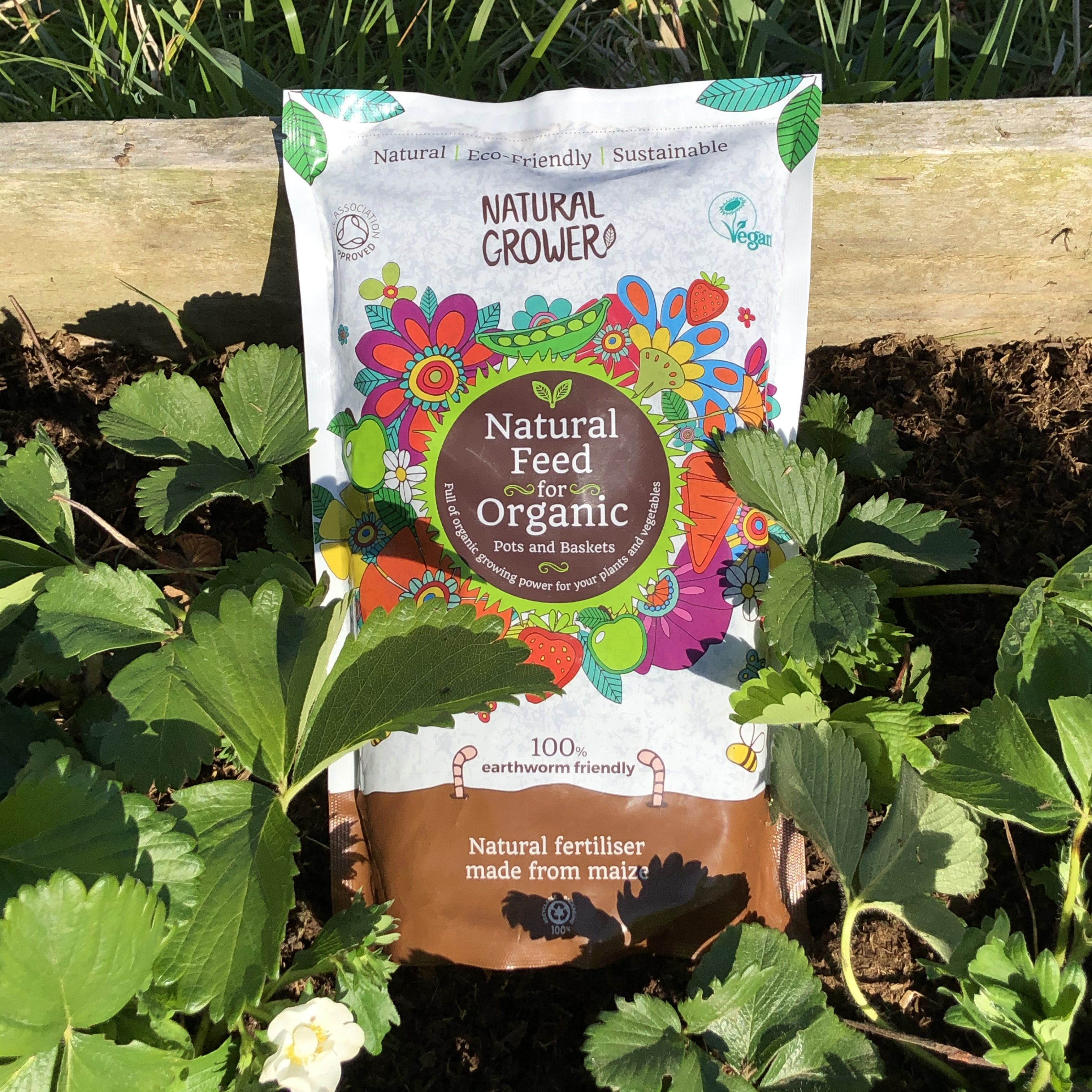
Gardening organically is a more affordable and long term alternative to using chemical fertilisers. Natural Grower products eliminate waste because the nutrients are slowly released to the plants as they need them. Over the long-term you save money because your soil health naturally improves, which in turn produces healthier, stronger, disease resistant plants. Chemical products may cost less financially in the short term, but they don’t provide any long-term benefits and the damage they do to the natural eco-system in the soil is costly.

Slow release for sustained growth
Organic fertilisers are broken down slowly by organisms in the soil to produce a more measured, consistent, natural release of nutrients. This results in uniform growth with strong stems and leaves, unlike chemical fertilisers which provide a sudden boost resulting in tall lanky plants. Stronger plants are more resistant to disease, and with the presence of mycorrizhal fungi to strengthen the roots, the plants, soil and fungi all work together long-term to create the perfect natural eco-system.

Love your land
The organic matter in Natural Grower will help keep your soil or compost in optimum condition, retain moisture over the dry summer months and improve the health and structure of your soil. The presence of natural Mycorrhizal fungi in our products enhances root growth, enabling plants to extract nutrients and absorb water more efficiently from the soil or compost. By using our products you will be supporting and enhancing the natural eco-system in the soil.

Embrace sustainability
Natural Grower’s chemical free fertiliser products are approved organic, biodynamic and vegan. Plant-based and free from chemicals they are safe to use around wildlife, pets and children. Eco-friendly and sustainably produced in the UK. Our packaging is made from recycled plastic where possible and is all 100% recyclable. We are always happy to refill used containers, and often sell our products in reused containers or slightly damaged packaging at a reduced price. Reduce, reuse, recycle.