





Parsnip Tender & True
Couldn't load pickup availability
Description
Parsnip 'Tender & True' Seeds
A Victorian exhibition variety with a flavour so sweet and a root so smooth that it has never been bettered. The parsnip that generations of British kitchen gardeners have trusted, and with very good reason.
There is something deeply satisfying about growing a variety that has been earning its place in British kitchen gardens since the 1890s. 'Tender & True' is an RHS Award of Garden Merit holder and one of the longest-standing parsnip varieties still in commercial cultivation — not because it has survived on reputation alone, but because nothing grown since has genuinely surpassed it. The roots are impressively long, with smooth, blemish-free ivory skin, a narrow core, and flesh of exceptional sweetness that intensifies dramatically after the first hard frosts of winter.
Above ground, 'Tender & True' is also genuinely beautiful. The tall, arching canopy of deeply divided, fern-like foliage adds a soft architectural quality to the vegetable garden — a lush, pale green column of texture that would not look out of place in a cottage border. Parsnips are among the most structurally handsome vegetables you can grow, and 'Tender & True', with its vigour and height, is one of the finest. Grow it for the Sunday roast, certainly — but do not underestimate how good it looks getting there.
🌿 Understanding the Plant
Pastinaca sativa 'Tender & True' is a Hardy Biennial grown as an annual root vegetable. It produces its edible taproot in Year 1 and, if left in the ground, would flower and set seed in Year 2 — though in kitchen garden practice it is harvested through autumn and winter of its first year. It is one of the most cold-hardy vegetables you can grow, and uniquely among common vegetables, its flavour actually improves with frost.
The Frost-Sweetening Explained: When temperatures drop below freezing, parsnips convert stored starches in the root into sugars as a natural antifreeze mechanism. This process — known as cold-induced sweetening — is the reason frost-lifted parsnips taste so dramatically better than those harvested in mild autumn conditions. 'Tender & True' responds to this process particularly well, developing a deep, honeyed sweetness that makes it quite exceptional for roasting, mashing, and soups.
Exhibition Heritage: 'Tender & True' was bred and selected during the golden age of Victorian vegetable showing — a period when long-rooted parsnips were exhibited in classes requiring roots of extraordinary length, straightness, and surface smoothness. This heritage is evident in the variety's performance: the roots are long (up to 35cm), consistently well-formed, largely canker-resistant, and strikingly clean-skinned. The narrow core — a feature specifically selected during breeding — means a higher ratio of the sweet outer flesh to the somewhat coarser central tissue.
Architectural Garden Value: Above ground, 'Tender & True' produces a substantial canopy of pinnate, deeply lobed foliage on hollow stems, reaching 60–90cm in height by midsummer. This bold, ferny growth adds genuine architectural presence to the vegetable plot — the pale green, softly textured foliage contrasts beautifully with the bolder leaves of squash and courgette, and provides a lush structural backdrop throughout the growing season.
🌱 Growing Guide
Parsnips have a reputation for being slow and temperamental — but 'Tender & True' is one of the more reliable varieties, and the key to success is straightforward: fresh seed, the right soil, and patience with germination.
Soil Preparation:
Parsnips demand deep, loose, stone-free soil to develop their long, straight roots. Avoid freshly manured ground — the excess nitrogen causes roots to fork and branch rather than driving straight down. If your soil is shallow, stony, or heavy clay, consider growing in a raised bed filled with deep, friable compost, or in tall containers (at least 40cm deep) of sandy loam. Dig or fork the bed to a spade's depth and remove any stones larger than a marble before sowing.
How to Sow:
Sow directly outdoors from February to May — parsnips must be direct-sown as they do not transplant well. Sow in drills approximately 1.5cm deep and 30cm apart, placing 3–4 seeds every 15cm and thinning to the strongest seedling once germinated. Parsnip seed has a short viability window — always use fresh seed each season and never sow seed that is more than one year old, as germination rates drop sharply. Germination is slow, typically taking 14–28 days, and requires consistent moisture throughout. Sowing alongside a fast-germinating radish as a row marker helps avoid accidentally disturbing the bed before the parsnip seedlings appear.
Ongoing Care:
Keep the bed weed-free, particularly in the early weeks when the small seedlings cannot compete. Water during prolonged dry spells to prevent the roots from splitting when rain eventually arrives. Parsnips require very little feeding — too much nitrogen produces lush foliage at the expense of root development. Once established they are largely self-sufficient.
Harvesting:
Roots are ready from October onwards, but flavour improves dramatically after the first hard frosts — the traditional wisdom is to wait until after the first proper frost before lifting the main crop. Harvest as needed through autumn and winter by lifting gently with a fork. Parsnips are exceptionally frost-hardy and can be left in the ground throughout winter, harvesting fresh as required right through to February or March — the ultimate low-maintenance winter larder.
📋 Plant Specifications
| Botanical Name | Pastinaca sativa 'Tender & True' |
| Common Name | Parsnip 'Tender & True' |
| Plant Type | Hardy Biennial, grown as an annual |
| Hardiness | H7 — Extremely frost hardy; roots can overwinter in the ground |
| Light Requirements | Full Sun / Light Shade ☀️⛅ |
| Foliage Height | 60cm – 90cm |
| Root Length | Up to 35cm (long, smooth, tapered) |
| Row Spacing | 30cm between rows; thin to 15cm within rows |
| Sowing Method | Direct sow only — does not transplant |
| Days to First Harvest | Approximately 100–120 days from sowing |
| Harvest Period | October to March (best after first frost) |
| Flavour Profile | Deeply sweet, honeyed, and nutty — intensifies significantly after frost |
| Disease Resistance | Good canker resistance |
| Seeds per Packet | Approximately 400 seeds |
| Perfect For |
Sunday Roasts & Winter Cooking
Frost-Hardy Winter Harvesting
Architectural Kitchen Gardens
Heritage & Heirloom Varieties
Pollinator-Friendly Veg Plots
|
🤝 Beautiful Garden Combinations
Parsnips are slow-growing and spend much of the season as foliage — these companions from our range make excellent use of the space around them while actively supporting the crop:
- 🧡 Calendula 'Art Shades Mixed': The Potager Companion. Calendula is one of the most valuable flowers in the kitchen garden and a natural companion for root vegetables. Its resin-coated roots actively deter soil nematodes and wireworms — two of the parsnip's principal underground enemies — whilst its flowers attract beneficial hoverflies and lacewings above ground. The warm apricot and cream tones of Art Shades planted along the edge of the parsnip bed add a beautiful softness to what can otherwise be a fairly utilitarian row, and the flowers are fully edible as a garnish throughout the summer months.
- 🌼 Nasturtium 'Tom Thumb': The Ground-Level Bodyguard. Nasturtiums make an excellent low-growing companion at the front of the parsnip bed — their peppery, pungent foliage deters aphids and carrot fly, one of the parsnip's most troublesome pests, whilst their compact habit means they never compete with the parsnip foliage above. As a trap crop, they draw blackfly away from the developing roots. Their bold orange and red flowers brighten the vegetable garden from early summer, and both the leaves and flowers are delicious in summer salads.
- 🌼 Borage: The Biodiversity Builder. Borage is one of the great general-purpose companions of the kitchen garden — its deep taproot draws up minerals from lower soil layers, its large leaves can be cut and used as a mulch as the season progresses, and its continuous production of electric-blue flowers provides high-value nectar for bees and beneficial insects throughout the summer. Planted at the end of parsnip rows, it creates a lively, pollinator-rich boundary that benefits the entire vegetable garden.
- 🌿 Basil Classic Italian: The Aromatic Deterrent. Basil's powerful aromatic oils are believed to deter aphids and carrot fly — two of the parsnip's most persistent pests — when planted nearby. It also makes a genuinely excellent culinary companion: a classic parsnip and apple soup finished with fresh basil oil, or oven-roasted parsnip chips served with a basil and Parmesan crumb, are both outstanding combinations that reward growing the two together.
📅 Sowing & Harvesting Calendar
Sow direct in spring for a long, patient growing season — then harvest from October right through to March, with the sweetest, most honeyed flavour arriving after the first hard frosts of winter.
| Jan | Feb | Mar | Apr | May | Jun | Jul | Aug | Sep | Oct | Nov | Dec | |
|---|---|---|---|---|---|---|---|---|---|---|---|---|
| 🌱 Sow Direct | ||||||||||||
| 🍽️ Harvest |
Two things matter most with parsnips. First, always use fresh seed — parsnip germination rates drop sharply after the first year, so never sow seed that is more than twelve months old. Second, resist harvesting the whole crop in October. Leave the roots in the ground and let the first hard frosts do their work — the cold converts starches to sugars and transforms a good parsnip into an exceptional one. The very best eating comes from roots lifted in December, January, or even February, straight from frozen ground to a hot oven.
🏆 RHS Award of Garden Merit
Pastinaca sativa 'Tender & True' holds the prestigious RHS Award of Garden Merit — a recognition that has been entirely justified by over a century of outstanding performance in British kitchen gardens. It remains the benchmark variety against which all long parsnips are measured, and for very good reason: nothing grown since has consistently surpassed its combination of flavour, smoothness, length, and canker resistance. A truly timeless variety worth growing every single year.
Delivery & Returns
Delivery:
Delivery to mainland UK is calculated at checkout. For all other areas and large orders please ask for a quote. Orders will be sent by express next day delivery (DPD). They will be dispatched on a next working day service, with the exception of Ireland where it may take two days. Please allow up to 48 hours for delivery in the UK as the couriers may have already been and collected on the day you send your order in. Smaller orders for pouches, pockets, bags and pots may be sent via Royal Mail delivery. Please ensure you supply an email address and a mobile so you can be updated about your delivery. Should you have any problems with your delivery, please contact us at sales@naturalgrower.co.uk.Special Deliveries
Saturday or weekday morning deliveries can be arranged, but there will be a surcharge. Please contact us to request a price for either of these delivery services. If you need a parcel sending outside of the UK, please contact us for a quote.Returns:
If you are not completely happy with any product that you have ordered from us, you may return it to us in its original condition any time within 14 calendar days from the date of dispatch. Products must be returned in their original condition. Please contact us at sales@naturalgrower.co.uk to arrange a return. If you return a product by post, you will need to pay the costs of returning the product to us and obtain proof of posting.
Be a smarter gardener
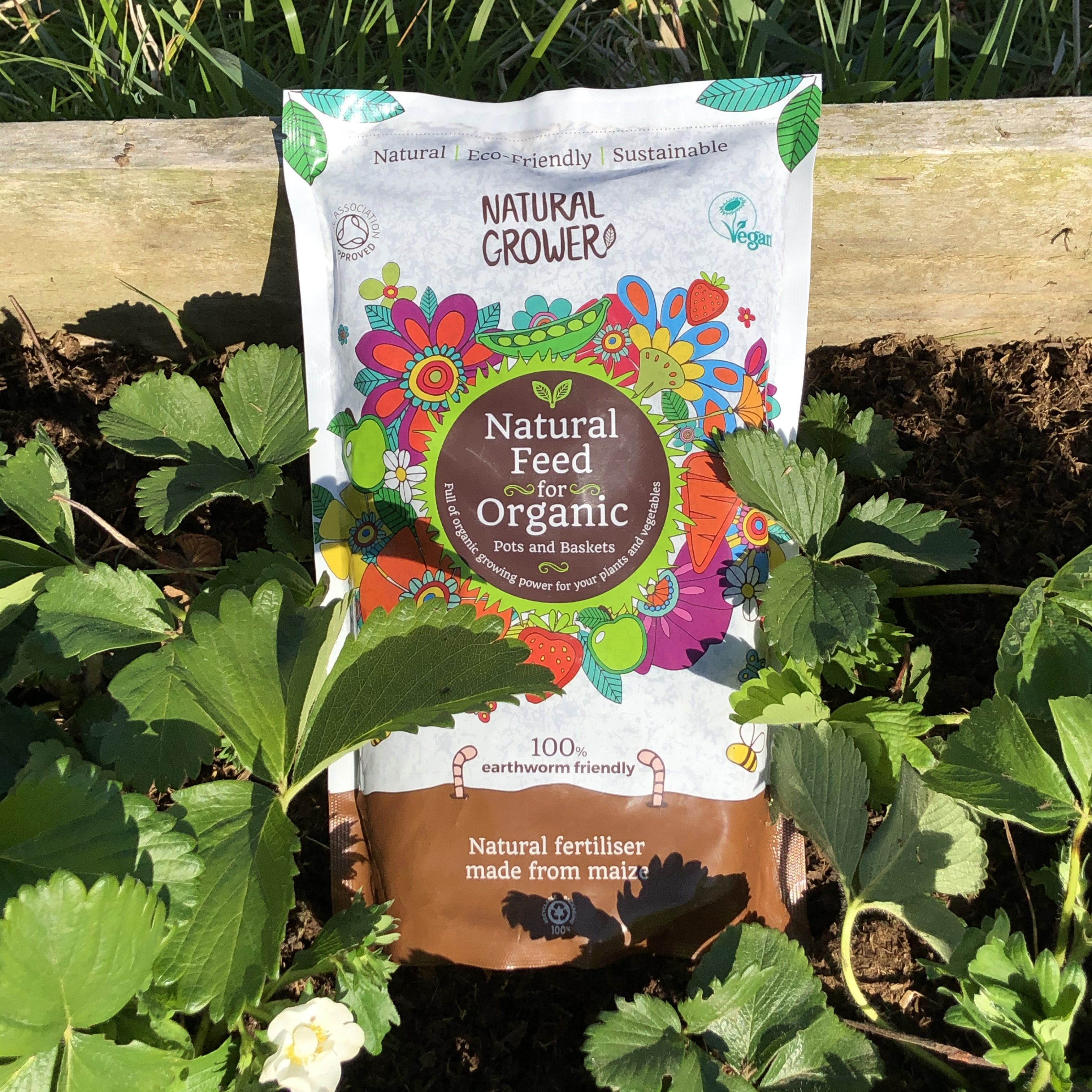
Gardening organically is a more affordable and long term alternative to using chemical fertilisers. Natural Grower products eliminate waste because the nutrients are slowly released to the plants as they need them. Over the long-term you save money because your soil health naturally improves, which in turn produces healthier, stronger, disease resistant plants. Chemical products may cost less financially in the short term, but they don’t provide any long-term benefits and the damage they do to the natural eco-system in the soil is costly.

Slow release for sustained growth
Organic fertilisers are broken down slowly by organisms in the soil to produce a more measured, consistent, natural release of nutrients. This results in uniform growth with strong stems and leaves, unlike chemical fertilisers which provide a sudden boost resulting in tall lanky plants. Stronger plants are more resistant to disease, and with the presence of mycorrizhal fungi to strengthen the roots, the plants, soil and fungi all work together long-term to create the perfect natural eco-system.

Love your land
The organic matter in Natural Grower will help keep your soil or compost in optimum condition, retain moisture over the dry summer months and improve the health and structure of your soil. The presence of natural Mycorrhizal fungi in our products enhances root growth, enabling plants to extract nutrients and absorb water more efficiently from the soil or compost. By using our products you will be supporting and enhancing the natural eco-system in the soil.

Embrace sustainability
Natural Grower’s chemical free fertiliser products are approved organic, biodynamic and vegan. Plant-based and free from chemicals they are safe to use around wildlife, pets and children. Eco-friendly and sustainably produced in the UK. Our packaging is made from recycled plastic where possible and is all 100% recyclable. We are always happy to refill used containers, and often sell our products in reused containers or slightly damaged packaging at a reduced price. Reduce, reuse, recycle.