





Cumin
Couldn't load pickup availability
Description
Cumin is the kitchen herb that British gardeners most often try once, struggle with, and then give up on — and that's a fair reaction, because cumin is genuinely difficult to grow in the UK. Native to the hot dry plains of Egypt, Iran and India, it expects long warm summers, low humidity, and the kind of relentless sunshine that British weather rarely delivers. The honest position: this is the herb you grow for the quiet satisfaction of having done it, not for a year's supply of spice. But if you have a greenhouse, a polytunnel or even a properly sunny conservatory, cumin is one of the most genuinely rewarding kitchen-garden challenges going.
The plant itself is rather lovely. A delicate feathery annual in the carrot family (Apiaceae — the same family as parsley, coriander, dill and fennel), reaching 30–50cm tall, with fine cut foliage and small umbels of white or pinkish flowers in midsummer. After flowering, the umbels develop into the long curved brown seeds that we know as the spice. Those seeds, freshly harvested, dried and lightly toasted in a hot pan, have a depth of warmth and earthy aroma that supermarket jars don't come close to. There's a reason cumin is one of the world's most-used culinary spices — and a reason that grow-your-own gardeners who succeed at it tend to dine out on the story afterwards.
Why this is the spice grower's challenge
Cumin is genuinely difficult in the UK for three connected reasons:
- It needs heat — consistent warmth around 20°C and above, with bright direct sunshine. A cool damp British July is not what cumin's evolution prepared it for
- It needs a long season — 90 to 120 days from sowing to mature seed. A late-spring sowing and an early autumn cool snap can leave you with green seed-heads that never properly ripen
- It hates humidity — British air is often too damp for cumin, which can encourage powdery mildew on the foliage and rot in the developing seed-heads
This is why growing under glass is essential in most British conditions. A greenhouse, polytunnel or sunny conservatory provides the warmth, dryness and protection cumin needs to actually finish its season properly. Outdoor sowing in the UK rarely produces a useable seed crop — the plant may grow and flower, but the seeds often fail to ripen before autumn cool. If you can offer cumin glass, it can be done; without glass, the realistic expectation is leaves and flowers, not spice.
What to grow it for
Given the challenge, what does success look like? Three honest answers:
- A small home harvest of properly aromatic fresh-dried cumin seed — usually a few small jars rather than a year's supply. But the flavour is genuinely different from shop-bought; richer, warmer, more complex, with the kind of freshness that ground cumin loses within weeks of packing
- The satisfaction of growing one of the world's iconic spices — a small piece of horticultural ambition for the home gardener who's already comfortable with the easy herbs
- The plant itself — rather lovely in flower, lacy and architectural in the greenhouse, attractive to the small bees and hoverflies that visit Apiaceae flowers. Worth growing as an ornamental in its own right
How to grow it
- Sow indoors from March to May in modules or small pots, at 20–25°C bottom heat. Cover lightly with vermiculite or fine compost (cumin needs darkness to germinate). Allow 10–14 days for germination, sometimes longer
- Pot on into 9cm pots once true leaves appear; cumin dislikes root disturbance, so handle gently
- Plant out into a greenhouse border or large container in late May or early June, after all risk of frost. Space 20cm apart. Cumin can be tried outdoors in a long hot summer in the warmest gardens, but the success rate is significantly lower
- Position in full sun — the brightest spot in your greenhouse, with good ventilation but no draughts
- Water sparingly — cumin's Mediterranean heritage means it tolerates and prefers slightly dry conditions; soggy soil and humid air are the biggest enemies
- Feed lightly — cumin doesn't want rich nitrogenous feeding; an occasional weak tomato feed once flowering is plenty
- Stake gently if needed — the delicate feathery stems can be top-heavy when seed-heads form
- Harvest the seed heads when most seeds have turned brown, usually 8–12 weeks after flowering. Cut whole heads, hang upside down in paper bags in a dry warm spot, and let the seeds finish drying for 2–3 weeks before storing
In the kitchen
Home-grown cumin seed is genuinely better than shop-bought. The traditional uses:
- Toasted whole and ground fresh — toast seeds in a hot dry pan until they pop and release their oil, then grind. The aroma is significantly more vivid than pre-ground
- Indian cooking — the cornerstone spice of curries, dals, biryanis. Add whole to hot oil at the start of cooking; add ground later
- Mexican and Tex-Mex — the warm earthiness of cumin defines chilli con carne, tacos and rubs for grilled meats
- North African cuisine — essential in ras el hanout, harissa, tagines, lamb and chickpea dishes
- Middle Eastern — baba ganoush, falafel, kebab spice mixes, sprinkled on yoghurt
- Baking and bread — cumin in flatbreads, naan, lavash, traditional Cypriot halloumi bread
- Pickling — cumin seed is excellent in pickle spice blends for vegetables and chutneys
At a glance
- Type: Annual herb (Cuminum cyminum, Apiaceae)
- Height: 30–50cm; Spread: 20cm; Spacing: 20cm
- Flowers: Small white or pinkish umbels in midsummer
- Sow: March to May indoors at 20–25°C; plant out under glass late May
- Harvest: August to October — when most seeds have turned brown
- Position: Full sun under glass — greenhouse, polytunnel, or sunny conservatory
- Uses: Whole seed toasted and ground for Indian, Mexican, North African and Middle Eastern cooking
- The honest challenge — needs glass in the UK; grow it for the satisfaction as much as the spice
Plant alongside
Cumin grows happily alongside French Marigold for natural aphid deterrence in the greenhouse, and Calendula to draw in pollinators for better seed-set. In the wider Mediterranean-style kitchen garden, cumin makes a strong companion to basil, coriander, dill, chillies and sweet peppers — share a greenhouse with them and you've got a proper spice-and-herb production unit. Coriander in particular is a near-cousin (same Apiaceae family, similar needs), and the two grown together provide both fresh herb and ground spice for almost any curry-style cooking.
Delivery
The seeds will be dispatched direct to you by Bishy Barnabees. Please allow up to 5 days for delivery.
Delivery & Returns
Delivery:
Delivery to mainland UK is calculated at checkout. For all other areas and large orders please ask for a quote. Orders will be sent by express next day delivery (DPD). They will be dispatched on a next working day service, with the exception of Ireland where it may take two days. Please allow up to 48 hours for delivery in the UK as the couriers may have already been and collected on the day you send your order in. Smaller orders for pouches, pockets, bags and pots may be sent via Royal Mail delivery. Please ensure you supply an email address and a mobile so you can be updated about your delivery. Should you have any problems with your delivery, please contact us at sales@naturalgrower.co.uk.Special Deliveries
Saturday or weekday morning deliveries can be arranged, but there will be a surcharge. Please contact us to request a price for either of these delivery services. If you need a parcel sending outside of the UK, please contact us for a quote.Returns:
If you are not completely happy with any product that you have ordered from us, you may return it to us in its original condition any time within 14 calendar days from the date of dispatch. Products must be returned in their original condition. Please contact us at sales@naturalgrower.co.uk to arrange a return. If you return a product by post, you will need to pay the costs of returning the product to us and obtain proof of posting.
Be a smarter gardener
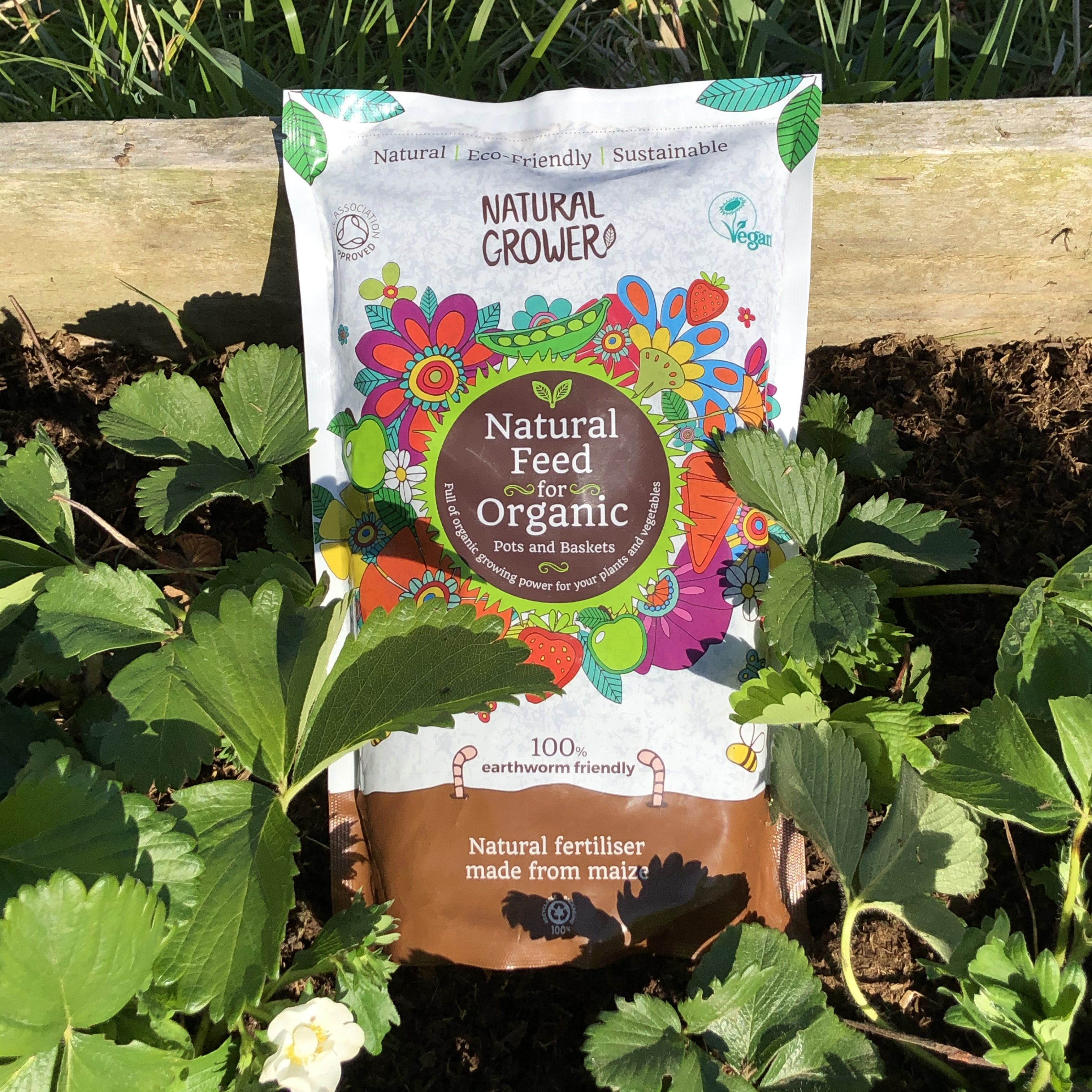
Gardening organically is a more affordable and long term alternative to using chemical fertilisers. Natural Grower products eliminate waste because the nutrients are slowly released to the plants as they need them. Over the long-term you save money because your soil health naturally improves, which in turn produces healthier, stronger, disease resistant plants. Chemical products may cost less financially in the short term, but they don’t provide any long-term benefits and the damage they do to the natural eco-system in the soil is costly.

Slow release for sustained growth
Organic fertilisers are broken down slowly by organisms in the soil to produce a more measured, consistent, natural release of nutrients. This results in uniform growth with strong stems and leaves, unlike chemical fertilisers which provide a sudden boost resulting in tall lanky plants. Stronger plants are more resistant to disease, and with the presence of mycorrizhal fungi to strengthen the roots, the plants, soil and fungi all work together long-term to create the perfect natural eco-system.

Love your land
The organic matter in Natural Grower will help keep your soil or compost in optimum condition, retain moisture over the dry summer months and improve the health and structure of your soil. The presence of natural Mycorrhizal fungi in our products enhances root growth, enabling plants to extract nutrients and absorb water more efficiently from the soil or compost. By using our products you will be supporting and enhancing the natural eco-system in the soil.

Embrace sustainability
Natural Grower’s chemical free fertiliser products are approved organic, biodynamic and vegan. Plant-based and free from chemicals they are safe to use around wildlife, pets and children. Eco-friendly and sustainably produced in the UK. Our packaging is made from recycled plastic where possible and is all 100% recyclable. We are always happy to refill used containers, and often sell our products in reused containers or slightly damaged packaging at a reduced price. Reduce, reuse, recycle.